African mango in Sugar Reset Drops is listed as "African Mango (Irvingia gabonensis) Seed Extract", the fourth of 22 items in the 200 mg proprietary blend, with no amount given1. It is best known from weight-loss supplement research, which is small and limited.
This page sets what the label says next to what NIH's Office of Dietary Supplements reports about the African mango trials: who ran them, what extract and amount they used, what side effects were seen, and where the gaps are. We are an independent information site. We do not say the African mango in Sugar Reset does anything for weight or anything else, and we found no published study of the product.
Four blend items, pictured
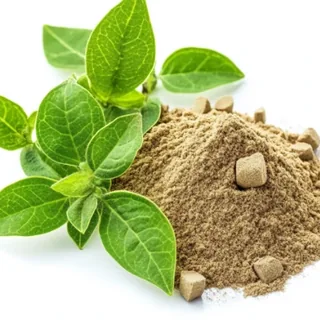 GymnemaIn the 200 mg blend · amount not stated
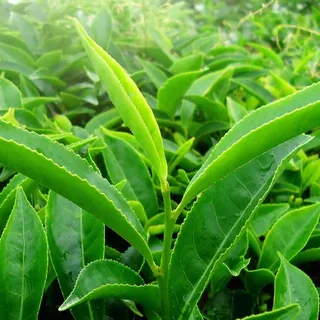 Green teaIn the 200 mg blend · amount not stated
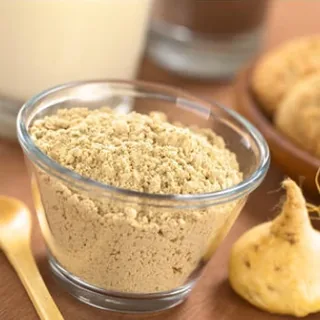 MacaIn the 200 mg blend · amount not stated
 Panax ginsengIn the 200 mg blend · amount not stated
Ingredient photos supplied with the seller's images. They show the plants in general, not what is in a dropper.
No.01How Much African Mango Is in Sugar Reset Drops?
The Sugar Reset Drops label gives no amount for African mango; it is one of 22 items sharing a 200 mg blend total1. The only firm limit comes from our arithmetic.
- Whatever the amount, it is less than 200 mg per 1 ml serving, because 200 mg is the whole blend.
- If the blend were split evenly, each item would be about 9 mg. The label does not say this, and an even split is unlikely.
- The label does not say what kind of seed extract is used, or how strong it is.
The dropper volume is not printed either. If a dropper holds 1 ml, two droppers a day would be two servings, so the African mango would still be under 400 mg a day by our arithmetic, with the real figure unknown. Our proprietary blend page explains why a blend total leaves these questions open.
No.02What Is Irvingia Gabonensis, the African Mango in Sugar Reset Drops?
Irvingia gabonensis is the Latin name the Sugar Reset Drops label prints for African mango, and the part used is the seed1. The label calls it a seed extract.
NIH's weight-loss fact sheet discusses African mango among ingredients sold for weight2. NIH does not describe the extract in Sugar Reset, and neither does the label. The name on a label tells you the plant and the part, not the product. Extracts can be made in different ways and at different strengths, and the label does not describe the one in Sugar Reset.
So when you read about African mango research, keep two questions in mind: was it the same kind of extract, and was it the same amount? For this product, the label answers neither.
The common name can also mislead. African mango sounds like a fruit you might eat, but the label names a seed extract of Irvingia gabonensis, not the fruit. What you know about eating fruit does not tell you anything about a concentrated seed extract, so it is best to judge the extract on its own evidence.
No.03What Have African Mango Studies Used, Compared With Sugar Reset Drops?
NIH reports a few small African mango trials, mostly run by the same group of authors, that tested one specific extract at 300 mg a day2. Sugar Reset Drops print no African mango amount at all.
| Question | African mango trials (NIH ODS) | Sugar Reset Drops label |
|---|---|---|
| Which extract? | One specific seed extract | "Seed Extract", type not named |
| Daily amount | 300 mg a day | Not stated; under 200 mg per 1 ml serving (our arithmetic) |
| Taken as | One specific extract | One of 22 items in a blend, plus chromium |
| Who studied it | A few small trials, mostly the same authors | No study of Sugar Reset found |
| Safety data | Human safety not rigorously studied | General label caution only |
By our arithmetic, a single 1 ml serving cannot hold the 300 mg a day used in those trials, because the whole blend is 200 mg. We cannot say how far below it the real amount falls. The comparison shows why the trials cannot be read across to this product.
No.04What Does the Evidence Say About African Mango and Weight?
NIH describes the African mango evidence as limited: a few small trials, mostly by the same authors, of one extract2. Small studies from one group are a weak base for any firm conclusion.
NIH's wider view of weight-loss supplements is similar. It says little is known about how well many of these ingredients work, and some have been linked to harm2. NIH also reminds readers that supplements are not approved by FDA before they are sold3.
For a reader thinking about weight and blood sugar, government sources point elsewhere for steps with evidence. CDC says the National Diabetes Prevention Program, a lifestyle change program, lowered the risk of type 2 diabetes by 58% in people with prediabetes, and that losing 5% to 7% of body weight and getting at least 150 minutes a week of brisk activity help4. Our prediabetes page covers those programs. None of that research involves Sugar Reset.
No.05Why Does It Matter That African Mango Trials Came From One Group?
It matters because a finding is stronger when separate teams repeat it, and NIH says most African mango trials came from the same authors2. One group's results, however careful, are a narrow base.
Here is why readers, not just scientists, should care:
- Independent teams use different people, places and methods. If a result holds up across them, it is more likely to be real.
- Small trials can show large differences by chance. More and larger trials help sort chance from a true pattern.
- When most studies share authors, any shared blind spot runs through all of them.
None of this says the trials were wrong. It says the evidence is thin, which is how NIH describes it. For Sugar Reset, the gap is wider still: no trial of the product exists that we could find, and the African mango amount is not printed. If you read a strong claim about African mango anywhere, set it against this background before you decide.
No.06What Side Effects Are Linked to African Mango?
NIH lists headache, sleep difficulty and gas among the side effects reported with African mango, and notes that its safety in people has not been rigorously studied2. These come from the small trials, not from Sugar Reset.
- Headache.
- Difficulty sleeping.
- Gas.
- One case report of kidney failure in a person with chronic kidney disease.
A single case report cannot show cause, but it is the reason people with kidney disease should talk with their doctor before any product that lists African mango. Sleep trouble is also worth noting because the same blend contains guarana and green tea, both caffeine sources, and the label gives no caffeine figure. If you notice any unusual symptom after starting a supplement, stop and contact your doctor. You can also report problems to FDA, as our side effects page explains.
No.07Who Should Ask a Doctor Before Sugar Reset Drops Because of African Mango?
Anyone with chronic kidney disease should ask a doctor before Sugar Reset Drops, given the kidney case report NIH describes2. The label's own caution widens the list.
The label says pregnant or nursing mothers, children under 18 and anyone with a known medical condition should consult a physician before using this or any dietary supplement1. Because African mango sits in a 22-item blend, the wider safety list applies too. Ask your doctor or pharmacist first if you:
- Have kidney disease, liver disease, heart disease or high blood pressure.
- Take diabetes medicine or insulin, blood pressure medicine or a blood thinner.
- Take thyroid medicine, a statin, an antidepressant or a sedative.
- Have trouble sleeping or are sensitive to caffeine.
Never change or stop a medicine because of a supplement. Our safety page has the full list.
No.08How Should You Think About African Mango in a 22-Item Blend?
African mango in Sugar Reset Drops is one part of a mix, so even good evidence on African mango alone would not describe this product. Here the evidence on African mango alone is limited too.
Three points follow from that:
- You cannot tell from the label how much African mango you would take.
- You cannot tell whether the extract matches the one in the trials.
- Any effect, wanted or not, could come from any of the 22 items, chromium or their mix.
That does not make the product harmful or useless; it makes it unknown. If you want to understand the whole list, our ingredients page covers every item. If you still want to ask about African mango in this product, the order desk number in the owner's pack is +1 (302) 200-34805. Ask what extract is used and how much a serving holds.
Shelf card
The 200 mg blend, item by item
All 22 items are listed on the label in this order under one 200 mg total, with no amount for any single item. Tap an item to see what it is and the caution our sources give. Filter to find the caffeine sources or the items with a known caution.
Plant or herb
African Mango (Irvingia gabonensis) Seed Extract
Amount per 1 ml: not stated (part of the 200 mg blend)
Seed extract of a West African tree.
Human safety has not been rigorously studied; one case report linked it to kidney failure in a person with chronic kidney disease.
Source: NIH ODS
Transcribed from the label photo. Our arithmetic: no single item can be more than 200 mg per 1 ml serving; an even split would be about 9 mg each, but the label does not say how the 200 mg is divided. No study of Sugar Reset exists that we could find.
Safety: Sugar Reset is a liquid dietary supplement sold for adults. Its label lists a 200 mg blend of 22 plant extracts, amino acids and compounds with no individual amounts, including caffeine sources (guarana, green tea), a licorice compound and grapefruit extract, and says that pregnant or nursing women, anyone under 18 and anyone with a known medical condition should consult a physician first. Ask your doctor or pharmacist before use if you take diabetes medicine or insulin, blood pressure medicine, a blood thinner, thyroid medicine, an antidepressant or any other medicine. Never change a prescribed medicine on your own, and do not use any supplement in place of diabetes care. Keep the bottle away from children and dogs (it contains xylitol).
Frequently asked questions
Is there a stated African mango amount on Sugar Reset?
No. African mango seed extract is one of 22 items in the 200 mg blend, so by our arithmetic it is under 200 mg per 1 ml serving.
Is the Irvingia gabonensis in Sugar Reset the extract used in studies?
We cannot tell. NIH describes trials of one specific seed extract at 300 mg a day, while the Sugar Reset label names only a seed extract with no type or amount.
Does any research tie the African mango in Sugar Reset to weight?
No one can say. There is no study of Sugar Reset, and NIH describes the African mango evidence as a few small trials, mostly by the same authors.
Why would kidney disease matter for the African mango in Sugar Reset?
NIH notes one case report of kidney failure in a person with chronic kidney disease who took African mango, and its human safety has not been rigorously studied, so ask your doctor first.
Which African mango side effects should Sugar Reset buyers know about?
NIH lists headache, sleep difficulty and gas from the small African mango trials. Contact your doctor about any unusual symptom after starting a supplement.